• Skip to main content

Boca Raton Dermalotogists - DermPartners Medical and Cosmetic Spa

Professional Dermatologists at DermPartners Medical and Cosmetic Spa in Boca Raton, South Florida. Contact us today to schedule a consultation with doctor.

  • Pay Bill
  • Patient Portal
  • Book Appointment
  • Home
  • Services
  • Health Library
  • About
  • Patient Resources
  • Contact
  • Shop

Chemical Peel

About Chemical Peel

What is it?

A chemical peel is a procedure in which a solution is applied to the top layer of your skin to remove dead, flaky skin cells. This allows the fresh, new layer of skin underneath to develop and grow, leaving you with a radiant and brightened complexion. There are three types of peels, each characterized by how deep they penetrate, which depends on the type and strength of the solution. These include superficial peels, which penetrate only as far as the outermost layer of the skin (epidermis), medium peels, which treat the top layer of the dermis (not to be confused with the epidermis), and deep peels, which treat the bottom layer of the dermis. Chemical peels offer numerous benefits, some of which include the following: erasure of fine lines and wrinkles, reduction of age/sun spots, smoothing of rough skin texture, faded shallow scars (including those from acne), improved skin tone, and balanced pigmentation.

What to expect

Chemical peels are safe for a variety of skin colors, although the lighter the skin, the more effective the treatment will be. To get the results you want, talk to the specialists at our dermatology center, as we’ll help you decide which type of peel is best and tailor the treatment to fit your specific needs.

After the procedure

Downtime and side effects will vary depending on the type of peel you undergo. For example, a superficial peel has no downtime, with only redness and minimal peeling for side effects. A medium peel typically requires 2-3 days of recovery, and common side effects include swelling, redness, and peeling for 4-7 days after the procedure. Finally, a deep peel can entail 1-2 weeks of downtime, more pronounced redness, and swelling for 7-10 days–perhaps longer. Regardless of which type of peel you undergo, you can expect smoother, fresher-looking, and radiant skin once the results are finalized.
Providers

Our approach & expertise

We know that a dull complexion and rough facial skin texture can negatively affect your appearance and make you self-conscious, which is why our skin specialists provide chemical peel treatments to help improve your complexion and refresh your appearance. Our compassionate practitioners are skilled and experienced at performing chemical peels to get the results you want, and we are also here to address your concerns and questions throughout the entire process.
Healthy skin is our passion. Contact us today to start your path towards a rejuvenated appearance.

CO2 Fractional Laser

Our skin saving laser treatments will help you look your best fast and with minimal downtime!

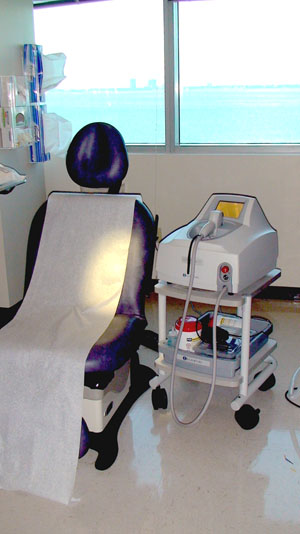
What Is Facial Rejuvenation or Laser Facelift Treatment Using a CO2 Fractional Laser?

Facial Rejuvenation, laser facelift or laser skin repair is the visible improvement of wrinkled, pigmented, and/or sun-damaged skin by removing enlarged blood vessels and irregular pigmentation and stimulating the underlying collagen. It is performed with a fractional laser also referred to as a CO2 laser or CO2 Fractionated laser. This treatment can also be used for photodamage, brown spots, liver spots, age spots, sun spots, wrinkles and acne scarring.

Can The Laser Treat Infants With Port-Wine Birthmarks?

Yes. The laser can be used to safely treat all sizes of Port-Wine Birthmarks in infants and adults.

How Does a Laser Help?

Using a beam of light, the laser treats a broad range of vascular conditions by selectively treating the areas of concern. The laser light selectively targets and coagulates problem blood vessels while leaving the surrounding skin unchanged. It destroys the underlying blood vessels that support growths such as warts and psoriasis and can selectively target red vessels and blotches on the face and legs, effectively treating facial and leg veins, rosacea and acne.

How Many Treatments Are Required?

Patients will see results within three to four weeks. Typically one to two treatments are recommended. For conditions such as birthmarks or hemangiomas, several treatments will be required.

Is The Treatment Painful?

There is some minor discomfort associated with laser treatment. Most patients describe the sensation as a series of rubber band snaps to the skin. The doctor can often reduce or eliminate this by cooling the treated area with an air-cooling device.

laser treatment for acne

Restylane

Restylane® and its close twin, Perlane®, is a cosmetic dermal filler that restores volume and fullness to the skin, correcting moderate to severe facial wrinkles and folds of all types. It is also used to increase fullness and enhance the lips, define the lip line, fill scars and restore facial areas that have lost their youthful appearance.

Perlane®, like Restylane,  is a clear gel formulation of a natural hyaluronic acid that is specifically formulated to add fullness like your body’s own hyaluronic acid. What makes Perlane® different is the average size of the particles and the depth of injection. On average, the gel particles in Perlane® are larger than those in Restylane®, which makes Perlane® a good choice for wrinkles that benefit from a deeper injection into the skin.

Juvederm

Juvederm® is a natural hyaluronic acid dermal filler that restores the lost volume that occurs with aging, smoothing away facial lines, wrinkles and folds. It may also be used to improve hollowing beneath the eyes, enhance and define the lips or contour facial features like the chin and cheeks.

Juvederm® gel is composed of a higher concentration of cross-linked hyaluronic acid than Restylane®. Because of this cross linking, Juvederm® has a softer more natural look and feel after being injected. Some report fewer bumps and less discomfort with Juvederm®. The results last around 8 months, compared to 6 months for Restylane®.

Why is hyaluronic acid so important?

Healthy, young skin is smooth and elastic and contains a large amount of hyaluronic acid. The lower skin layer, also called the dermis, primarily contains two protein fibers: collagen and elastin. Together collagen and elastin create a framework for supporting essential skin structures. The dermis is hydrated by floating these proteins and other vital skin structures in a “sea” of hyaluronic acid. Hyaluronic acid is capable of binding 1000 times its own weight in water and is therefore essential for maintaining skin integrity and fullness.

The ability of our skin to produce hyaluronic acid slowly diminishes with time causing the skin to loose volume. A consequence of this volume loss is that our skin becomes looser, leading to wrinkling and an aged appearance. Treatment with Juvederm® replaces lost hyaluronic acid restoring the skin to a healthier, more youthful appearance.

What areas can be treated with Juvederm®?

Like Restylane®, Juvederm® is used to correct facial lines, wrinkles and folds such as:

  • Nasolabial folds (smile lines)
  • Frown Lines between the eyebrows (glabella)
  • Horizontal Forehead Lines (worry lines)
  • Lines extending from outer corner of the eyes (crow’s feet)
  • Hallowing under the eyes (tear trough)
  • Vertical Lines above the upper lip
  • Corner of the Mouth (marionette lines)
  • Defining Lip Border
  • Lip Volume Enhancement
  • Lifting and Providing Volume To The Cheeks and Chin (facial contouring)
  • Jowl Area

Visit the Juvederm® official website

View a Juvederm® anti-aging treatment presentation:
An Experienced Hand Makes the Difference…

Precise placement technique means you get the best and longest lasting results from your Juvederm®.

Will my facial expressions continue to look natural?

Our philosophy is to produce a natural result. Although the results are visible, a treatment with Juvederm® dermal filler will not radically change your facial appearance or make you look as if you “had work” done.  The trick is to make sure you retain a natural ability to show emotions through facial movements.

We’ve all seen the “frozen face” on someone who’s been overdone. With our extensive experience and expert touch, you’ll never have to worry about looking unnatural.

Why does Juvederm® come in two formulations?

Juvederm® comes in two different formulations allowing us to tailor treatment to your unique needs. Juvederm™ Ultra allows versatility in volumizing facial wrinkles, lines and folds and in augmenting and defining the lips. Juvederm™ Ultra Plus is a more robust formulation used for volumizing and correcting deeper folds and wrinkles and for contouring chin and cheeks.

Do the Juvederm® injections hurt?

Topical numbing creams or local anesthesia mixed with the filler may be used to minimize any discomfort during this quick procedure.

What is the recovery like after the Juvederm® procedure?

Most commonly reported side effects include, but are not limited to, redness, swelling and minor discomfort which tend to subside within several days.

How long do the results of Juvederm® last?

Results with Juvederm® are practically instantaneous and typically last about six to nine months depending on the area treated.

Can I use Juvederm® with Botox® ?

Yes, in many areas we can utilize both products. They are not only complementary but also the effects are synergistic in many cases. By relaxing muscle movement with Botox® before injecting Juvederm® we often obtain a better aesthetic correction and the Juvederm® treatments tend to last longer.

Dysport

Dysport® is an injectable dermal filler that is used to help smooth wrinkles and lines on the face and improve the overall look of the skin. As we age fine lines and wrinkles appear over time, Dysport® can reduce moderate to severe frown lines around the mouth, lips, on the forehead and in the cheek area without drastically changing the natural look of your face.

If you’re serious about treating your frown lines, it’s a good time to consider Dysport® – another prescription treatment option for temporarily improving moderate to severe frown lines.

What causes frown lines?

Over time, repeated movement of the facial skin by the forehead muscles forms lines between the eyebrows. Frown lines are “dynamic” – they happen because of the way a person’s face moves.

Are they always related to age?

No. Because frown lines are created by facial movements, such as frowning or squinting, they may develop even in younger adults.

Prescription Dysport® temporarily improves the look of your frown lines without changing the look of your whole face. Untreated facial muscles still work normally.

What is the most important information you should know about Dysport®?

Spread of Toxin Effects: In some cases, the effects of Dysport® and all botulinum toxin products may affect areas of the body away from the injection site. These effects can cause symptoms of a serious condition called botulism. Symptoms of botulism can happen hours to weeks after injection and may include swallowing and breathing problems, loss of strength and muscle weakness all over the body, double vision, blurred vision and drooping eyelids, hoarseness or change or loss of voice, trouble saying words clearly, or loss of bladder control.

Mohs Micrographic Surgery

About Mohs Micrographic Surgery

What is it?

Developed in the 1930s by Dr. Frederick Mohs, Mohs micrographic surgery is an extremely effective treatment for a variety of skin cancers. Due to its accuracy, high success rate, and cosmetically appropriate outcomes, Mohs remains the gold standard for skin cancer removal. The surgical specialists at our center are highly trained to perform this precise surgery with skill and technique refined through years of experience and study.

What to expect

We are fortunate to have a large team of Mohs surgeons on our staff who have devoted all their attention to treating skin cancer patients. These specialists can remove all vestiges of the tumor so you can have your life back and live it to the fullest. With Mohs, elimination of a tumor is precise and success is immediate and long-lasting. Under the expert guidance of our surgeons, Mohs surgery can provide complete tumor removal, including cancerous cells that are unseen (and therefore left behind) during other skin cancer removal procedures. Once skin cancer has been eliminated from your tissues, treatment is complete and you’ll be 100% cancer-free, with no estimation or uncertainty.

After the procedure

The Mohs procedure has a proven high success rate (studies have shown 5-year cure rates of over 99% for new cancers) and grants patients quicker recovery times (2-4 weeks) than other skin cancer procedures.

  • The visible tumor, along with a very thin layer of presumably healthy tissue, is excised, frozen and immediately examined under a microscope for malignant cells. The procedure is repeated until the last layer of tissue examined is tumor-free. This procedure allows for the removal of the smallest amount of healthy tissue. Once clear, the area is closed often with reconstructive techniques to insure the best possible cosmetic outcome.

Photodynamic Therapy (PDT)


  • A light-sensitizing agent such as 5-aminolevulinic acid (5-ALA) is applied to the lesion and absorbed by the tumor cells. When exposed to a powerful light source, the chemical is activated and destroys the cancer.


Before PDT


After PDT


Excisional Surgery


  • The physician administers a numbing anesthetic before excising the cancer and a safety margin with a scalpel. The area is then closed with stitches.

Curettage-electrodesiccation

  • The growth is scraped off with a curette, a ring-shaped instrument, before a burning, high-frequency current is applied to the lesion to destroy any residual tumor and to control bleeding.

Radiation

  • X-rays or electron beams are focused on the cancer; the healthy tissue is protected with a lead shield. The procedure is repeated over multiple visits.

Laser Surgery

  • Carbon dioxide (CO2) and erbium YAG lasers can be used to evaporate or cut cancerous tissue away from the skin surface.

Cryosurgery

  • A cotton-tipped applicator or spray gun filled with liquid nitrogen, cooled to -40°C or below, is applied to the skin cancer tumor for about 30 seconds. The frozen cancer is allowed to thaw for several minutes, then the procedure is repeated two or more times. After several weeks, the dead cancerous tissue sloughs off.

Lymph Node Dissection

  • Used in combination with the excision of some melanomas. After surgical removal, the lymph nodes closest to the melanoma may be inspected microscopically to see if the cancer has spread. If the first lymph node (the sentinel node) in the basin is found to be malignant, then the remainder of the local nodes are removed.

Additional Options

Short Term Mole Monitoring

Short term mole monitoring is an additional diagnostic tool used for the early detection of melanoma. It is typically used to monitor a single suspicious growth that lacks definite dermatoscopic features of melanoma. The technique is most often used for changing moles that appear benign with dermoscopy or in the case of certain suspicious moles that have no history of clinical change.

A high resolution digital dermatoscopic image is taken and then photographed again after a 3 month interval. Studies have verified that unchanged lesions are benign and those that demonstrate change are likely malignant. Ultimately, short term mole monitoring allows for the detection of melanoma at its earliest stage and helps avoid unnecessary excisions.

Dermoscopy/Epiluminescence Microscopy (ELM) or Skin Surface Microscopy

Dermscopy, also known as epiluminescence microscopy (ELM) or skin surface microscopy, is a non-invasive technique utilizing a hand held microscopic that allows magnified examination of suspicious skin growths.

Dermoscopy helps to distinguish between benign and malignant skin lesions and has been shown in several studies to increase the diagnostic accuracy of melanoma. This tool allows us to detect melanomas earlier and avoid unnecessary biopsies of benign lesions.

Topical Medications

Topical Medications

  • Topical medications can sometimes be used For actinic keratoses (AKs) and superficial BCCs
  • 5-fluorouracil (5-FU) cream or solution is the most widely used topical treatment; imiquimod cream, which stimulates the immune system to produce cancer-fighting interferon, is also used.

Other Treatment Options

  • Chemotherapy, immunotherapy or biochemotherapy are sometimes used for patients with Stage III or IV melanoma

Molluscum Contagiosum

About Molluscum Contagiosum

What is it?

The condition spreads through contact with an infected person or a contaminated object. Though painless, the small bumps might itch. Scratched bumps can spread the infection to the surrounding skin. The bumps usually disappear on their own. In rare cases, the bumps can be removed using medications or other procedures.

What causes it?

This is a very common ailment for children, and from a virus called molluscum contagiosum which is a skin infection.
People catch molluscum contagiosum when they get the virus on their skin. Skin-to-skin contact with someone who has molluscum, touching an object that someone who has molluscum touched. Or, sharing a personal item, such as clothing or a towel.
Anyone can get molluscum contagiosum, some people are more likely to catch it. Children who are 1 to 10 years old are more prone to get this skin infection because they have the most skin-to-skin contact. They seem especially vulnerable if they have eczema. The extremely dry, cracked skin of eczema may make it easier for the virus to infect the skin. Athletes who share equipment, or have skin-to-skin contact. People with compromised immune systems can be more vulnerable to catching this, as well as those who are sexually active.

Common treatments

Several treatment options are available, it’s important to know that there is no one best treatment for molluscum. One of our highly trained dermatologists will choose a treatment based on many considerations, such as overall health, the number of molluscum bumps, and where the bumps appear. No matter which treatment is used, it takes time.
A common treatment is cantharidin (beetle juice). Made from blister beetles, it has been used this to treat warts and molluscum since the 1950s. Your dermatologist will apply it to each bump in such a way that a water blister forms. You should see a blister on each treated bump within 24 to 48 hours. As the skin heals, the bumps clear. This usually occurs within 2 weeks. To be effective, most patients need more than one treatment. This is a safe and effective treatment and is topical.
Other treatments are cryotherapy, an extremely cold substance to each molluscum bump. You will need to return for treatment until the bumps clear. Another is curettage which can be used, this is a simple and effective treatment that causes little or no bleeding. Pulsed dye laser (PDL) may be a treatment option for someone who has many molluscum bumps. It’s also recommended for patients with difficult-to-treat molluscum, such as people with AIDS.
Trust your doctor to advise you on the most effective way to treat your skin, the health of your skin is very important to us.

Providers

Our approach & expertise

We understand how molluscum contagiosum can be a physical nuisance, itchy, and even affect your self-esteem. As your experienced community skin experts, we have the knowledge to help you manage this condition. Healthy skin is our passion. Contact us for an appointment today if you suspect you have molluscum contagiosum.

« Previous Page

Boca Raton Dermalotogists - DermPartners Medical and Cosmetic SpaLogo Header Menu
  • Services
  • Health Library
  • About
    • Patient Resources
    • Pay Bill
    • Patient Portal
  • Book Appointment
  • Shop